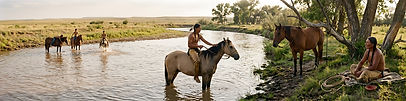
The Horse and the Spirit
The Indigenous Philosophy

There are two ways of looking at a horse.
The first, inherited from the Western tradition, sees an animal to be domesticated: a tool for plowing, for war, for transport. Useful. Controllable. Subordinate.
The second belongs to the Native American nations of the Great Plains.
When the Lakota first encountered the horse at the turn of the 17th century, they gave it a telling name: Šúŋka Wakȟáŋ, the sacred dog, the mysterious dog. The word wakȟáŋ is the very same one used for the Great Mystery, the sacredness that dwells in all things in their cosmology. The Blackfeet spoke of the Ponokamita, the elk dog, come from the spirits. The Comanche called it God Dog.
A name. And already everything is said: this animal is not a tool. It is a being.
For the peoples of the Plains, the horse is not a resource to be exploited. It is a relative, an ally, a messenger from the spirit world. This vision (radically different from anything the West has ever thought about the horse) gave rise to practices, ceremonies, and a philosophy of the human–horse bond of a richness that few cultures in the world have ever matched.
It is this philosophy that this series explores. Not the history of the horse's adoption (covered in our series Indigenous Peoples and the Horse — The Forgotten History) but the way of seeing. The cosmology. The way of thinking about and living the bond between human and horse as something living, reciprocal, and sacred.
From the Šúŋka Wakȟáŋ of the Lakota to the rites of war paint, from capture without force to the warrior societies, all the way to the legacy this knowledge passed on to contemporary natural horsemanship: five articles to step into another world.